
“Terrible Science”: Leading campaign group slams new claims linking smacking to poor school grades
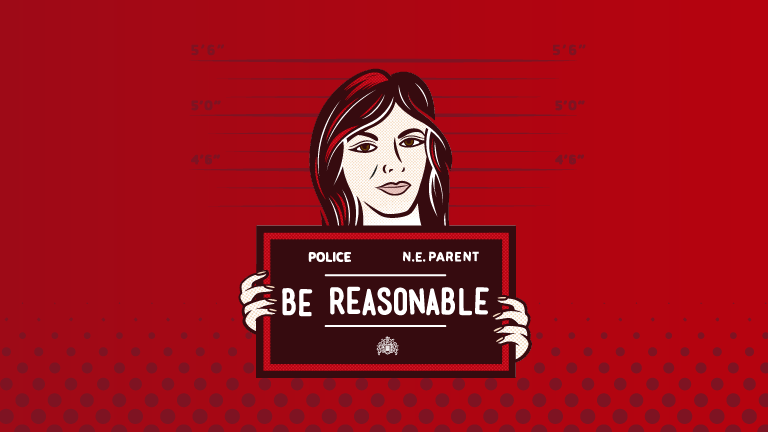
The Be Reasonable campaign has dismissed new claims linking the disciplinary practice of smacking to poorer GCSE grades, labelling the claims “terrible science” and a “dangerous distortion of the facts”.
The claims originate from a project led by long-time anti-smacking advocates at University College London (UCL), working in partnership with the NSPCC. The group was granted more than a third of a million pounds by the Nuffield Foundation to advance policy arguments against the current law.
These advocacy groups have campaigned against the ‘reasonable chastisement’ defence for the last two decades, despite the UK already having some of the world’s strongest protections against child abuse. Under current legislation, the defence enables parents to argue that they acted lawfully only where their actions are deemed ‘reasonable’ and have caused no harm.
James Kennedy, spokesman for the Be Reasonable campaign, said:
“Time and again, the same old arguments are wheeled out to tell only half the story.
“It comes as no surprise that academically high-achieving children are less likely to misbehave, and therefore less likely to be smacked. But to suggest smacking itself causes worse outcomes is terrible science and a dangerous distortion of the facts.
“As recent analysis by The Christian Institute has shown, research in this area cannot be reliably applied to UK law-making because it has never proved a causal link. Any differences in outcomes are typically very small and likely connected to other socio-economic factors.
“Our politicians must not be distracted. They should stay focused on preventing actual abuse, not wasting the time of overstretched social workers by sending them to police the homes of loving families.”